Custom Aluminum Extrusion

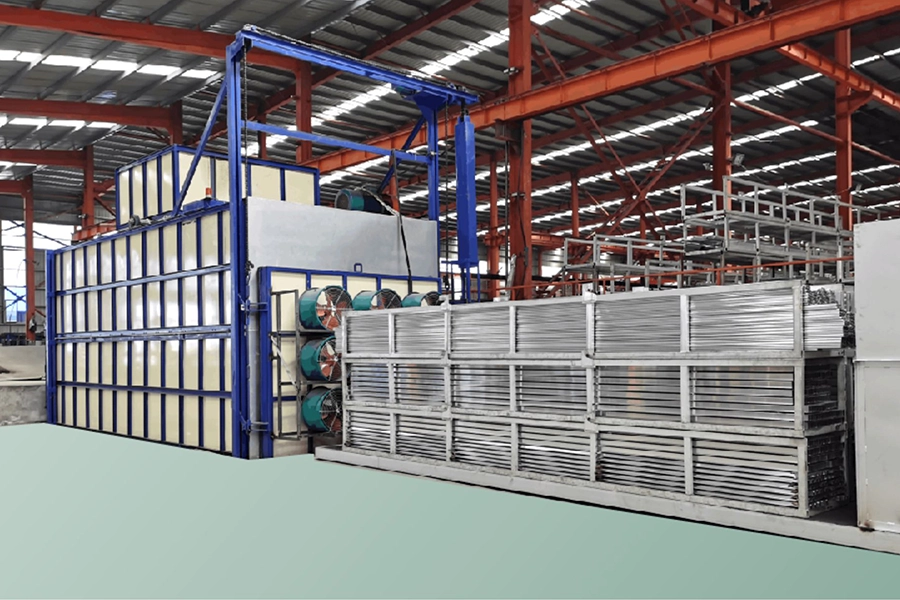
We offer optimized die design and customized aluminum extrusion services tailored to aluminum profile components, supporting complex profiles and high-tonnage extrusion processes.

Accepted files: STEP | IGS | PDF  | DWG

Custom Aluminum Extrusion Capabilities

Mold Production

Mold design and production

Conventional extrusion

Suitable for most profiles, economical and efficient

Large Tonnage Extrusion

Extruder supports 5000 tons of extrusion

Tempering Process

T5 or T6

Aluminum Extrusion Capabilities

Extrusion size

Extrusion dimensions typically take into account cross-sectional dimensions and design complexity.

Part LengthOrientation and Form ToleranceAngularity Tolerance
0 to 12″(300 mm)+/- 0.005″ (0.125 mm)Angularity +/ ½ degree
12″ to 24″(600 mm)+/- 0.010″(0.250 mm)Angularity +/ ½ degree
24″-36“(900 mm)+/1/64″(0.016″)(0.400 mm)Angularity +/-1degree
36“ – 60“(1500 mm)+/- 1/32″ (0.031″)Angularity +/-1 degree
Over 60″+/1/6″ (0.063″)Angularity +/-1 degree

Extrusion production capacity

ItemPart size/dimension
Maximal part size1300 mm (50 in)
Minimal part size2 mm (0.08 in)
Minimal diameter0.3 mm (0.01 in)

Custom Extruded Aluminum Profiles

Our quality team rigorously monitors the entire manufacturing process of extruded aluminum components, from raw materials to finished product delivery, ensuring customer needs and satisfaction.

Aluminum Enclosure

Custom extruded aluminum enclosures are widely used for electronic and industrial applications. Designed for durability and precision, they can be combined with CNC machining and surface finishing to achieve accurate dimensions, reliable protection, and a clean appearance.

Aluminum Heat Sink

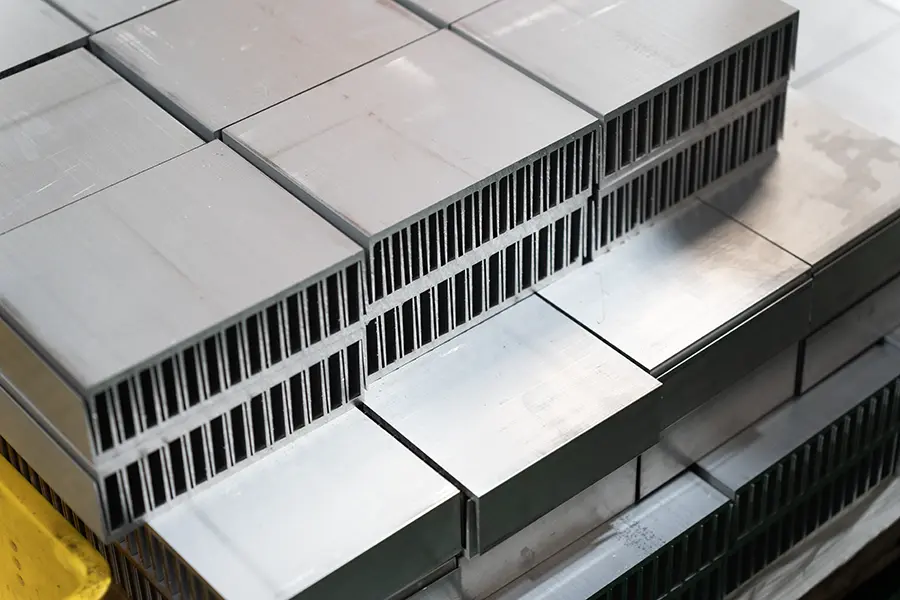
Extruded aluminum heat sinks provide efficient thermal management for electronic components. Optimized fin structures and profile design ensure effective heat dissipation, while secondary machining enables precise mounting and integration.

Glass Fence Floor Trough

Extruded aluminum floor troughs are designed for glass railing systems, offering strong structural support and secure installation. Profiles can be customized to match different glass thicknesses and project requirements, with excellent corrosion resistance for indoor and outdoor use.

Aluminum Window Profile

Aluminum window profiles are engineered for strength, weather resistance, and long-term durability. Extrusion allows complex cross-sections for insulation and sealing, making them suitable for modern architectural and construction applications.

Common Aluminum Material for Aluminum Extrusion

Aluminum 6061

Al–Mg–Si

6061 aluminum is a versatile alloy widely used in aluminum extrusion. It provides a good balance of strength, corrosion resistance, and structural performance. In extrusion applications, 6061 is ideal for structural profiles, frames, and load-bearing components that require higher strength and can also support secondary CNC machining for precision features.

Aluminum 6063

Al–Mg–Si

6063 aluminum is known for its excellent surface finish and outstanding extrudability. It is softer and more ductile than 6061, making it ideal for aluminum extrusion profiles with complex cross-sections and applications where appearance and surface quality are important.


Aluminum 6082

Al–Mg–Si

6082 aluminum is a high-strength alloy commonly used in Europe as an alternative to 6061. It offers higher mechanical strength and good resistance to stress corrosion cracking, while maintaining suitable extrudability. In aluminum extrusion, 6082 is often used for structural profiles and load-bearing components that require enhanced strength.

Aluminum 7075

Al–Mg–Si

7075 aluminum is a high-strength aerospace-grade alloy with exceptional hardness and fatigue resistance. It is less suitable for extrusion but can be used for simpler profiles requiring very high strength. In aluminum applications, 7075 is typically used for critical structural parts and components that demand maximum strength-to-weight performance.

Aluminum Extrusion Design Guide

Avoid overly deep cavities, grooves and holes

The depth of the cavity and groove is usually related to the diameter of the tool used to make the internal fillets. Keep the cavity depth 3 – 4 times the tool diameter or the groove depth less than 4 times the feature width. Blind holes or Through holes(Suggestion):

  • Standard-size holes: can be machined quickly and with high precision
  • Maximum depth: 4 times the diameter
  • Minimum hole diameter: 1 mm

Using an end mill will increase costs for non-standard holes.

Avoid right angles

Avoid right angle designs in recessed areas. CNC milling and turning usually use cylindrical tools, which cannot cut a perfect right angle and usually leave a small radius. Therefore, during milling, the corners of the concave areas are all rounded.

Avoid thin walls

Vibration increases when machining thin features. The minimum thickness of thin-walled aluminum parts should be 0.5-0.8 mm. If the walls are for supporting action or taller features, the thickness should be increased to avoid vibrations during CNC machining

Avoid small or raised logo

Adding text in the custom CNC machining is time-consuming to process.
electrochemical etching or laser marking is usually better. If you must cut text, choose recessed rather than raised text whenever possible, with a font depth of no more than 0.3mm.

Stick to the standards for threads

Sticking to standard sizes is important when creating threads.

  • Length: a maximum of 3 times the nominal diameter of a hole.

For blind hole tapping, it is preferable to add a length of at least 1/2 hole diameter at the root of the hole. You could think about using inserts. threaded coils provide longer service life than bare threads, especially in soft materials such as aluminum, and are easy to install.

We strictly adhere to ISO quality standards and have been certified to ISO 90001: 2015. Our production lines use advanced technology to ensure manufacturing precision and accuracy. With in-house advanced measuring and testing equipments, we can verify that all materials and products meet your specifications.

Instant Quoting

If your RFQ contains clear information, quotations are typically delivered in a few hours.

Full Service

Our own industrial park includes extrusion, CNC, surface treatment and other production lines, can provide all processing needs for aluminum product processing and production.

Industry Experience

Having carried out rapid prototyping and rapid manufacturing since 2004, our engineers have built up rich experience. We can handle all types of projects.

30K+ Projects Delivered

Over 10K projects have been sent to our customers worldwide since we started in 2004, and we have received countless positive comments.

Get the feeback in one day, start now!

Get The Quote In One Day, Start Now!